|
Chapter 7 ‘Different worlds’
I have talked about churches and museums, and one might think that there’s a difference. But actually they both serve to give us a different idea of what art can achieve. Churches have been here for centuries. They were, or still are a place where one can go to visit something (or Someone) much bigger than us. The paintings adorning the church are usually enormous and are there to remind us of that. Museums are much the same. When we visit a museum, especially one dedicated to contemporary art, we go to see something that we cannot find anywhere else. Although some places, like London’s National or Portrait galleries, show us paintings, some of which can fit into our homes, we know we can’t see them anywhere else. It’s the same with the art in the churches. Although we may have a Crucifix or holy picture at home, we can never possess an iconic painting or maybe a ten foot candelabra in our house. So those two spaces show us an art that is totally different to the art we aspire to have at home. Two different art worlds for two distinct purposes. Now the trouble in understanding and accepting the differences comes because it is the ones creating sometimes outrageous art that get into these hallowed spaces, and catch the headlines. It’s what makes us love or loathe them and their art. But that would be a completely wrong attitude towards museum art. I will try to explain a little, not to make you, as I said, love or hate, but to realise that the ones who are in control want something different to what one can purchase from a normal gallery. These days, especially at the Biennales, curators and organisers ask certain artists to do site-specific artworks that can sometimes even fill the grandest of places at these huge international exhibitions. My wife and I attended the 2017 Venice Biennale as we were there for our honeymoon. We viewed all sorts of art in all sorts of places. From huge palazzos to little chapels, there was something for everyone to enjoy. From Damien Hurst’s over the top Treasures from the wreck of the unbelievable to Lorenzo Quinn’s Support, a pair of arms coming out of the water holding a building, to a much less ornate semi-precious stone circular motif in a small church, in a suburban narrow Venetian lane, we enjoyed them all. Each and every one of them invariably made us want to go and sit and sketch the Serenissima more than ever. Now both Hurst and Quinn, as well as some other big names, started making smaller versions of their articles, ones that if you could still afford them, you can take home. They are still more expensive than the works of a multitude of other artists, but at least they are within reach of the serious collector. But the yawning gap between these elite artists and the rest, is and probably will always be, significant enough to keep the barrier raised between the two groups. Is their art better just because it is enormously more expensive than other art? NO! Luck had a lot to do with the outcome of some who found fame and fortune in the art world. There’s a lot to be said about being in the right place at the right time. Would Damien Hurst be a global phenomenon if mister Saatchi wasn’t there? I’m just asking. But then you can also ask the same question about Vincent Van Gogh. Would his paintings have finally found fame if it wasn’t for his sister-in-law’s promoting them after his and his brother’s demise? Sometimes there is no answer to such questions. The important thing I’m trying to promote is that in the art world there is something for everyone. From the joy one gets from sticking their daughter’s first attempt at painting, on the fridge, to becoming so obsessed with collecting fine art, that it takes over your life. Whether you just love to have a particular artist’s work on your wall, or you just bought something because you liked the look of it, or where it reminded you of, enjoy your acquisition. And occasionally, take pleasure in visiting the galleries and museums that seem to be sprouting everywhere, making us aware that we just cannot live without art. Chapter 6 ‘Good art, Bad art’ What is good art? What makes bad art? Can you always tell the difference? Well there are certain prerequisites and fundamental criteria to answer that question, but it’s not such a straight, black and white, one. There are a lot of factors, both human and aesthetics. Again I will try to explain. Many will argue: ‘I know what I like’, and that’s fair enough. The human factor is the most considerable to acknowledge, because we can all look at the same thing and feel and see something completely different to each other. For example, we can say we like detail in a painting. So if we go to a gallery and see a very detailed work of art, we might target that and won’t give the same attention to other pictures that might not have our concept of what is good art. The same argument can be had to all kinds of art, and indeed design. Another person might like a painting because it’s got their favourite colour, so if for example, red is you colour, your eyes will immediately go to anything with red in it. Or you might like a certain genre’ of art, like landscapes or seascapes. So if ever you enter a place where art is being sold, you will not look at anything else. But purchasing art is an art in itself sometimes. If you’re one of the latter persons I speak about, there might be say, twenty landscape paintings hanging on the gallery walls. How are you going to choose? Many times it all depends on the reason why you went there to purchase a work of art. The more you look and research what you’re interested in, the more you’re training your eye to sift the good art from what is not so good. You start asking questions. Why do I think that this piece is well painted? It you’re after a realistic image, for example, is the image balanced well? Has the artist put light in the picture? Has he made good use of colour balance? Does it speak to you like the real thing did? Remember the more you see, the more your eye and mind will figure these things out and help you make the right choice in buying a painting. Another thing you should ask yourself is; ‘Is this going to be a one off purchase, or is this the beginning of something bigger?’ A collection is usually made up of an eclectic assortment of works. So just because the colour red is your favourite, it will be a very poor compilation if they were all red, or landscapes or whatever. And that is why researching and learning about good art, not just from one genre’ but a diverse range of different types of art, even those you might not like right now, is essential. Also, but not only, do you prefer watercolours, oils, or acrylics? Or if we can extend that into sculpture, is your preference ceramics, bronze, or wood? You can see by these questions that buying an artwork is simple, but deciding to start a collection is somewhat different. And that is why you need to visit galleries, research art and artists, and get a better understanding of what makes good and bad art. And you really have to set your mind to fully open to all. I think that most people’s ideology of what is good art comes in two distinct forms: Traditional or Contemporary. Realism or Abstraction. And that’s when your mind has to be fully exposed to all kinds of art. I remember when I started painting, which was way back in the late fifties and sixties, my cousins, who were also artists, laughed and even detested abstract paintings. They painted as realistically as they could. That was what they were taught, and they never changed, because there was no one to convince them differently. And for a long time I also did the same. Now I paint in two very distinct fields of art. As I have mentioned before I paint views of Dorset, which I consider Traditional, but I also produce Abstract canvases. These days one can see literally millions of images. You can go to museums and galleries and research. Everyone is able to see and listen to various artists, gallery owners and critics talk about all the numerous categories of art there is. And whether you’re an artist or want to collect art you just have to manoeuvre through every channel available to you. That is the way to open your eyes and mind to what is and isn’t what you actually want to create or possess. Throughout my years as an artist and art tutor, I have come to experience a lot of different emotions while going about creating or helping others do so. I’ve come to understand that there will always be those who will not change as to what they like. And that is alright too. I remember when I started painting abstracts seriously. It was while I was producing and presenting a series of television programs for one of the main channels on the island. The most loved and well-like program was called Malta on Canvas. Every week in the program I visited towns, cities and villages on the two islands on Malta and Gozo and I painted en plein air, much like the Impressionists did in France and elsewhere. It was very well received by all. But doing this week after week for a few years, I got the urge to do something completely different. Having been fascinated by the abstract paintings of the great Gerhard Richter I tried something completely different to what I was used to paint. I remember watching a few videos on the artist and the way he produced very realistic paintings, but also created huge abstract canvases all made by using a squeegee. I went into one of the back rooms of what was then our first gallery in Malta, and started on a metre square canvas, squeezing paint straight from the tube onto the surface and working through the canvas using bits of mount board like mister Richter used his squeegee. I came out of there after an hour breathless and sweating. It was a totally new and different experience to what I was used to up to that point. This wasn’t just replicating something that was in front of me, or copying a photograph. This was a feeling unlike anything I had experienced before. Even through my breathlessness, I felt euphoric. The painting did not speak to me at that moment, but I knew from that I had to dive into this new experience with all my body and soul. The excitement of watching those colours meld into each other, the control I needed not to let them become mud, but shine, each and every one of them. The challenge of building a painting out of something that did not exist, exhilarated me and had me addicted instantly. I write this because of the perception of so many people that abstract art is easy. Sure it’s very easy to just pour paint or slap it randomly onto a canvas . But as with other things, to actually produce something that looks and feels good as an abstraction, takes a lot of experience and knowledge of colours, balance of hues and tones of the colours you use together. So if somebody ever looks at a Gerhard Richter or any other famous abstract art and says that his or her son could have done that, it just speaks of ignorance of the genre’. I don’t mean that in a derogatory sense. I just mean a lack of knowledge on the subject. One very important point I will make is this: that most good abstract artists did not start making abstract art to begin with. And here I must, once again, mention the great Gerhard Richter. When he started painting he did so by making very realistic landscapes and portraits. He created still life images, using oils and brushes in a very traditional way. It was only later that he started using a squeegee to paint his monumental abstract master-pieces. And that’s what makes him stand out as a modern master. And another thing to add to the debate is that there has been a lot more mediocre traditional paintings, both in the past and the present. A good painting stands out whatever type of art it is, whenever it was made. Just think about it. even in renaissance time we know of just a handful of names that made it to the pinnacle, but how many others were there that were never good enough? In Verrocchio’s studio only Leonardo stands out as a master even though he had a huge number of other artists working for him. And so it is today, with every kind of art one cares to mention. So good or bad art is not that which you prefer, desire, or think is relevant. Not even the subject matter. It is how well it has been executed by the artist. Does the piece tell you that its creator knows his craft well? You may be a novice to all this, but take heart. If you are serious about buying or collecting art, you will get better at deciphering the wheat from the chaff, as it was. Whether we are aware of it or not, art has always made us think, feel and learn in ways nothing else can. You will indeed know that we cannot live without art. Chapter 5 ‘Different art worlds’ Today, through news channels and social media, we can see what’s happening everywhere at any time. Not only that, but we can Google, watch You-Tube or any of the multitude of visual channels we can find, and know what is going on in the art world. But sometimes something gets the headlines which makes us all baffled, if not amused and confused. Only a few months ago someone stuck a banana with duct tape and called it art. We laughed because to most of us it was just the next ridiculous thing to come out of the so called art world. We stopped laughing when, at auction it sold for $6.2 million. Of course this caused a sensation. But it wasn’t the first to do so, and I’m sure it will not be the last. One of the first objects, if not actually the first to be called ‘art’ was a porcelain urinal. In 1917 Marcel Duchamp got one of these urinals, tipped it upside down and called it ‘Fountain’. He submitted it in the society of Independent artists in New York. He even signed it R. Mutt, not his real name. They rejected it. He resigned. Picasso did the same with a bicycle handle and seat, and called it ‘Bull’. Whether we laugh at such works, or whether like some, take them seriously, the Dechamp’s Urinal has inspired many contemporary artists to follow suit. Take Tracy Emin’s unmade bed, for instance. As it was more recent than the infamous Urinal, it got a lot more of attention from the public, especially as it was shortlisted for the Turner prize. Charles Saatchi bought it for £150,000 and later it was sold at auction for over £2,000,000. It has since been loaned to Tate Britain as part of their permanent collection. What have these two (and I’ll put the banana with these) have in common? Why are they called ‘art’? These questions , and probably a lot more have been asked and debated for a long time now, and will continue to do so. What is worth noting though is that they, first and foremost, made us think about art as a whole. Whatever we feel about this kind of art, it has the feel of Made you look! One theory is that if it’s in a gallery, it must be art. The same Marcel Dechamp famously said : ‘Art is what you can get away with.’ And what about Damien Hurst’s Sharks in formaldehyde? That too caused quite a storm when it was first exhibited. It was titled: The physical impossibility of Death in the mind of someone living. It made mister Hurst a global sensation, which ironically was the Title of Mister Saatchi’s exhibition of The Young British Artists, where the said shark was exhibited. These exhibits, along with many others in the exhibition made us think outside the box, many for the first time. For as long as art had been created, we thought of most of it as beautiful or powerful, serene or dynamic, awe-inspiring or maybe alarming even. But this new concept made us think differently. It aroused diverse, unusual feelings in us. It altered our perception of what can be artistic. Let me give you an unpretentious and unassuming example, one that maybe even you have done. Let’s take a humble tea cup. You might have had that cup for a long time, and the only thing you ever used it for was to drink some tea from it. Then one day you decide to get another cup, but you still love that old tea-cup, and don’t feel you could justify throwing it away. You look at it and still love the little design on it. Then you remember you have a little plant that needs to be put in a container. It’s in a plastic plant pot that fits exactly into that cup. Should I go on? So without even you realising, you have changed the aesthetic of that cup. It is now no longer a vessel to drink tea out of, but something completely different, a new perception of the same object. And it’s the same with these art conceptions. Hence the term Conceptual Art. The lesson here is that different art needs to be seen and treated differently. Being in front of a Caravaggio in a museum is different to standing opposite a De Kooning. Going around a Bernini will give you a very specific feeling, distinctive to moving around Hurst’s shark. I admit that sometimes even I, as an artist myself, find it difficult to comprehend certain works that seem to ty to inflate themselves with hot air for no apparent reason than to scream at you to justify themselves, just because they happen to have been selected for an exhibition somewhere. And then there is the other very obvious reason why we don’t connect with certain art. I say obvious because some art is just made to be shown in grand and open spaces of multi-million dollar fancy museums. You even go to visit such places because you know you’re going to be treated to something extraordinary and outlandish. One way or another, it’s going to make you talk about it. And it doesn’t matter if it’s positively or otherwise. Always go to visit such places with an open mind. That way you may stand a better chance to get into the artist’s head and reason for creating that piece. And time does change our perspective of everything. Remember that in a previous chapter I did say that what we now regard as masterpieces were not necessarily accepted by their contemporaries. Some artists were actually derided for their work, just because it wasn’t yet fashionable. Turner is one prime example of this. And yet now we know that he was just way ahead of his contemporaries. Some of his paintings were looked at with disdain and laughed at for being anything but good art. Now they are revered as a celebration of colour and joy. Some of his paintings were almost abstract, two hundred years before the advent of the genre’. Marvel at the Old Masters, admire and respect the artists of a hundred years ago. But try also to get in touch with today’s art, or at least some of it to start with. Don’t hesitate to search and research all the reasons and debates about certain art. You don’t have to agree with all that is said, but at least you’re connecting, always learning about the subject. Again I shall emphasise, it will enhance your life. As with every other thing you may come across, you don’t have to like all you see and experience. Just like you have your favourite dish that someone else might turn his nose up at, we all have our preferences. What you might not like, someone else will want to collect and vice-versa. I love the word eclectic. That’s what makes the world so colourful. It is how we should look at art. Why we cannot live wothout artChapter 4 ‘Starting a collection’ Many times, what started as a singular purchase of a painting you fell in love with, turns into something much more serious and meaningful. The second piece of art that you purchase might become the foundation a collection. Possessing art can be seductively addictive. It will become much bigger than you thought it could ever imagine. It will overtake your home and sometimes your life. It is something that is very hard to resist once you start. It can become an obsession. It will turn into an exciting venture that can change your whole domain. ‘But I can’t afford to start buying paintings. I’m not that rich. And I don’t have that much space on the walls.’ This is some of the reasoning many of us will rightly come up with. And there are several reasons why we might think that way. To start with there’s what we listen to on the news and social media. We hear of paintings going for millions of pounds or dollars at auction houses. We see the big names like Monet or Picasso being auctioned for hundreds of millions, and immediately think: ‘How can I ever become an art collector? Well, there are actually millions of other paintings, from millions of other artists that can be found in several galleries, antique emporiums or as I have already mentioned, even at a car boot sale. You don’t have to be a multi-millionaire to start collecting art. And not every piece of art is hyper expensive. I have been in several galleries in London where every painting or sculpture I saw I wouldn’t buy even if I could afford it. But my wife and I have been to smaller galleries and purchased lovely, fine paintings or sculptures. So get to know and visit several galleries, either locally or when you’re on holiday. Research these places and see what they offer. Usually their websites will show you the names of the artists they have together with samples of their work and their price. See what arouses in you a desire to own one of those paintings. Then visit the place, already knowing what you expect to see. When you get there, engage in a little chat with the manager or owner of the gallery. They can usually give you a little historical information about the artist and the piece you have your eye on. That way you’re already getting acquainted not just with the work, but hopefully with the artist himself. Of course, sometimes you can go to an establishment, like an antiques shop and fall in love with a painting which you find is unsigned. This happened to us a few times now. For example, I had seen a small painting depicting a market flower seller and a woman dressed in black, trying to make up her mind what to purchase from him. I loved the painting and so did my wife. We manged to barter with the owner of the antique shop and brought it home. Even though we want to change the framing, we love it. It tells a story, and it’s painted with beautiful bright colours, as fits the subject. We shall hang it together with the other paintings, and show it off with pride. Oh, and when I took it off the mount-board, to reframe it, there actually was a signature! Once you get committed about starting a collection, it’s like anything else that you experience in life. Although you might begin with an unassuming work, you soon develop a taste for a better and maybe more well-known artist. That’s when you really start getting serious. Believe me, you will be thinking about getting the next one very soon. Collecting art is like a drug, but a more satisfying and rewarding one. The pleasure of having art in your home is immeasurable. And everyone who visits will see and share your passion. Your smile will tell them just how proud you are with every painting hanging on your walls, or every sculpture adorning your shelves. Just remember, it doesn’t have to start big. It will grow by itself, both in monetary value and numerically. And you will amaze yourself after a few years, seeing that what started as a modest purchase, has now become a passion that you can’t get away from. And whenever you look at any of the artwork that has now become a part of your life, you will realise that it has indeed changed the way you look at the rest of the world. I will try to explain. Let’s say you have a painting of a tree. A simple image in watercolours. I can assure you that after you hang that painting on your wall, every time you’re walking in the countryside or come across a tree in one of your walks, you will look at your painting differently. Art makes you stop to not just see the world, but to examine it, to take it in, appreciate that tree better than you have ever done. I remember in one of my workshops that I held, we covered Abstract painting. Some of my students wanted to paint a country scene. That particular workshop ended up about the power of colour. It started as an abstract, and it could have ended that way. I asked everyone what they thought of it. everyone said an abstract, but they love the colours. But then I continued painting, reefing here and there, but not much. I asked them what they see now. A field of poppies appeared in the midst of a wheat field. Trees started forming from the greens. The blue became a sky. What I’m trying to say is that when you see life, like a poppy field in the distance, only your mind is telling you it’s a poppy field. But the artist, by putting a few brushstrokes of red paint is telling you what your mind and eyes are seeing. That’s the power of painting. And that is what you come to appreciate the more your collection grows. And besides that, if you’re like me, although I do it also as an artist, you will want to research more art, maybe even buying books on art that will enhance your collection. One thing is for sure, having a relationship with art will enhance and enrich your life. So whether you get a piece of art to decorate a wall, which can turn into something more considerably significant, enjoy it. Let art enhance your life and those who come to visit your home. Let it put a smile on your face whenever you pass it by. It will become part of who you are, because art; a painting a sculpture or anything else that comes to adorn your home, is more than just an expedient piece of furniture to be used or fill a spot. Art speaks to us like no other object can. Art has always done that and will continue to do so as long as there is someone, an artist, who wants to Chapter 3 ‘Old versus new’ There are some names in the art world that are revered as geniuses. Old masters, artists with extraordinary talents. The mere mention of Leonardo Da Vinci, Michelangelo or Rembrandt, makes you feel reverence, veneration even, towards their names. And quite appropriately too. They were masters of their craft. Any of the main Impressionists, like Monet , Degas or Van Gogh, although he was a post-Impressionist, are among the most loved and talked about artists in the world. Here in England we have names like JMW Turner or John Constable among others. We go and visit the National gallery or Tate Britain just to see their work. They have made a name and an indelible mark on art history. But when it comes to contemporary artists, many times it’s a different story. Why? Well to start with, a lot of people do not understand or accept that which is new or different. There are many artists that are still producing art in the traditional way, There is nothing wrong with that. It is why you can still go to a gallery and as I said in the previous chapter, purchase a lovely painting of a place you have just visited. But today’s famous art is not made for the same purpose as it was a hundred and fifty years ago. So many of us just don’t like it or assent to it. In fact even some critics deride it as rubbish. So now I find myself having to hopefully make you think a little differently. The first thing to know is that every ‘contemporary’ period of art had its ridiculers. Second, although we idolise and respect the names of artists like Leonardo, how many artist living in that period never made it, either because they were not given the opportunity or they weren’t good enough? History only remembers the masters, the geniuses and their brilliant work, but forgets all the others who despite working hard with their talent, didn’t quite make the mark. Another thing to remember as well is that time seems to either play tricks on our minds, or maybe, hopefully, educate them. What do I mean by that? Well, let’s take the Impressionists I just mentioned a couple of paragraphs earlier. Were they immediately accepted as the brilliant artists we respect today? What happened when Claude Monet exhibited what was to become the first Impressionist painting, Impression sunrise? What kind of critique did it receive? I quote: ‘Wall paper in its embryonic state.’ It was actually the art critic Luis Leroy who came up with what was supposed to be a derisory title, Impressionists. Critics felt the painting was unfinished, crude, and technically limited compared to the polished academician art of the time, viewing it as more of a sketch than a mature work. It was only much later that people came to appreciate and admire Monet’s paintings and the style of that group of artists. The term Impressionists was not given as a compliment to those artists, although later they themselves chose to keep it. It was the same with Pablo Picasso, when he dared to change his style of painting, which as everyone now knows he did several times. A lot of critics did not understand cubism or the way he distorted a woman’s face to depict her portrait. He said his inspiration was Paul Cezanne, who had been experimenting with fragmenting his paintings into different shapes. As with many other things in life, sometimes it takes time and a little understanding and educating, to appreciate certain things, including different art forms. In New York, in the middle of the twentieth century, a new group came along calling themselves the Abstract Expressionists. They were mostly migrants from Europe who wanted to create something different, something bold. They wanted to get away from the ashes of the Second World War. They sought to paint something that was spontaneous and that would incur emotion to the viewer. They were called the New York School but also nicknamed the Irascibles, as many thought that their paintings grew out of anger. But it was far from it. True, that when you see the paintings of Jackson Pollocks, Willem De Kooning or Joan Mitchell to name a few of the big names, you will at first think that their paintings were done in a petulant hurry. But that is very far from the truth. There was great thought and feeling put into those paintings. A great deal of energy, yes, but there was also ponderous consideration in their concept, construction and composition. They opened a wide door to many today who are still inspired by the idea of feeling rather than just seeing a work of art. One did not have to see an object, a view, or anything else, but feel the colours, the brushwork and the objective of those, mainly huge, canvases. So while we still admire the works of the old masters, even if it is for a totally different reason to these afore mentioned artists, we must remember that once the old masters were new and their art was different to the ones considered Old Masters back then. They had their own critics and faultfinders. They were ridiculed both in the journals of the day and also by some of their contemporaries. But one thing remains the same, whatever age the art is, we just cannot live without it. Whether it’s the old paintings, or whether the new, contemporary work that energise us and gets our emotions going. That’s why we love to visit galleries and museums. We know that we are going to experience something to feed our heart and soul. And when we can, we want one or more of those images on our walls. Art is in our blood, instinctively. It lives there because we know it makes us feel good. It’s what makes us human. All of us want to relive memories, places we’ve been to, or people we have met along the way. Whether it’s not worth much, or is of great monetary value, we want to have it in our home because we deem it as part of our lives, of who we are, or were, at a certain time or place. It appeals to our sub conscience in a way that few other things can. Do not ever let anyone tell you what you should or shouldn’t like or purchase in the art you choose to collect, or what is or isn’t valuable. There is another, completely different, reason why you should have art in your home. We shall go through that in the next chapter. But always know and appreciate the first and foremost reason for possessing a piece of art: The joy it gave you when you first saw it and knew you had to have it, to live with it for a very long time. Here's chapter two of my article Why we cannot live without art. Chapter two ‘Custodians of Art’ Today we hear of the word Curator when it comes to art exhibitions. There are more Museums, Galleries and Art academies than ever before. In fact never in the history of man has there been such a demand and interest in the art world as now. Although print making started a few centuries back, interest in purchasing and collecting prints has become more popular. Hence if one cannot afford an original work of art, many artists can offer an inexpensive alternative in making a few prints from their original work. Prints are even being produced from highly sought after and expensive paintings. Even sculpture can now be made into a limited edition that would sell for a fraction of the original. And this is true of several famous and well-known artists as well as others. Usually the prints are also made in a smaller scale to the original painting, so many more home owners can fit them into their houses. Hence art can now be bought and appreciated by more people than ever before. All of this shows the considerable appetite for owning a piece of art, even if you cannot afford the sometimes extravagant prices of the higher echelon of artists and galleries. Most of us want to be custodians of a piece of art, and who knows, maybe it will impel us to, at some point, start a collection, one piece at a time. Now as an artist myself, I would like to promote living artists. These are the ones who need to be seen and collected most. Contemporary artists are the ones who are sweating blood and tears in their studio to create, to paint, to sculpt to produce new, fresh art and find an exhibition space to show their work. So I would encourage everyone who covets a piece of art in their home to first of all look at some of the huge number of artists we can find either in an actual gallery or online. It’s easy enough to do some research on Google to find quite a number of them. Find out what your tastes are, what you would like to see hanging on your wall or placed on a piece of fine furniture you inherited or purchased. But please, oh please, do not ever think that a painting or a frame has to fit in with your decor, your curtains, or the colour of your walls. Now liking a painting can be for a few different reasons. Maybe you have just visited a place and fell in love with it. You might have stumbled into the local gallery and spotted a quaint little painting of the place. You think of it hanging on your wall, reminding you of the good time you shared with your loved ones or friends. Through that painting, you can almost relive those times. Another reason for purchasing art is what it actually made you feel when you first saw it. An old artist friend of mine (he was ninety one at the time we exhibited together at Bournemouth Gardens) used to say to his customers: ‘When you see a painting you like, think of it as love at first sight, you feel you have to have it.’ And many times it worked! My wife and I have purchased quite a few art pieces like that. Whether it was a painting, a ceramic piece or even an arty jug, if we fall in love with the piece, we usually buy it, unless it’s far too expensive as sometimes one’s taste exceeds one’s pocket. But we find there’s always something we both like and able to acquire. Antique shops or car-boot sales are another source of finding something you might want to bring home. Of course this might be against what I have said in the previous paragraph about buying art from a living artist, but when you purchase something from any of these outlets, you know that that piece has a history and it had already been loved by someone else. Sometimes you are able to get the story behind the work, to which you can now add your own experience. Unlike money, art has a soul, a story to tell, it has or will have a life that you can share with it. Once it’s in your home, you are not only the curator of it, but the custodian of its very existence. And it’s also very different to any piece of furniture you have. You will develop a relationship with it. You can show it off to visitors, and maybe relate the story or incident behind it. It will enrich your life immeasurably. It is not just another object in your house. It will be a companion that makes it a home. First of all... A happy New Year to all who viist. This year I'm going to try to be more active in not only putting more of my work here, but to write my views on art, mine and other art. The first I have been writing is something that will be useful, not only to artists, but to those purchasing art, or even starting a collection. I will be adding a chapter every week, on a Saturday. Happy reading Why we cannot live without art Chapter 1 ‘Art has always been’ Every form of art has been in existence much longer than any language, kingdom or any other form of communication. The paintings in the caves of Sulawesi, in Indonesia are over forty five thousand years old. There are paintings like them to be found in other caves around the world, like the ones in the Chauvet caves in France, being around thirty six thousand years old. The fact is that people communicated with art before they could speak a language. As the saying goes: ‘A picture is worth a thousand words.’ We don’t know exactly when humans started using spoken language to interact with each other, but the oldest written languages were Sumerian, Egyptian and Akkadian. They are all extinct now, but they were only used some five thousand years ago. Even the hieroglyphical language of the ancient Egyptians are made up of pictures, which goes on to show how important images were in communicating to those ancient people to connect with each other. And that’s besides the monumental sculptures to be found there, which are all depicted with the same images of that particular language. Painting, carving and sculpting are the earliest form of expression known to us. Another form of art is dancing. Not only has every nation and tribe in existence used this art form to entertain themselves, but also to communicate with their gods. Dancing for rain, to stop some pestilence or just as a social event, throughout the centuries it has been another form of self-expression, to get people together in good and bad times. And with this comes singing. Whether its chanting or singing to a tune. All forms of art are expressions of our feelings. That is why you see a child dancing, moving rhythmically and singing or humming a tune, before they can speak or walk. At school, the first thing your child brings home is not words, but pictures, even if it is just a print of their own hands. Art is deeply set in our instinct, in our inner selves, and somehow it has to express itself one way or another. In this way we are all born with the capacity to convey our feelings in some form of artistic manner. And even if, in later life, when we’ve grown up and living gets in the way, those who do not become artists in some form or another, still appreciate a painting, a dance, or a song. It still has the capacity to make us feel good, happy, or even sad at times. Art speaks to our emotions. Let us go back in history and examine the influence of art in society. Let’s go back to that first world power, Egypt. When we think of that kingdom, two things come to mind; the Pyramids and the Temples inscribed with Hieroglyphs. Would those awesome structures have come about if someone didn’t first make an image of them on some parchment? Would the Pharaohs and the builders know what they were doing if the architects didn’t first of all draw the plans and images of the buildings? Would we know their stories if someone didn’t carve them out in hieroglyphic form, little pictures that was then the language form of that magnificent and powerful kingdom? Now let’s move forward to religion, the great Cathedrals and Churches of Christendom in particular. How did the church inspire, move and even frighten people into believing, worshipping, and be afraid of displeasing God? Most of the people in the dark and middle ages could not read or write. Literacy was very low and limited to the clergy, and maybe a few elite together with some merchants. So churches were adorned with art. Art to inspire, and at the same time, to frighten the faithful, to keep the congregation loyal and steadfast in their beliefs. Paintings of heaven and hell made sure all those who came to church could see and understand, through the art on the walls, what their Creator is expecting of them. Even the few Bibles and other writings that were produced, had illustrations within them. And most of the time those visuals were more powerful than the text itself. Even today, whether you are a believer or not, you visit these buildings just to see the paintings on the wall, the magnificent interior carvings in stone and wood. Images of God, Jesus, Mary and other Saints painted and printed to inspire those coveting to attain their Heavenly afterlife. I remember, living in Catholic Malta where everyone seemed to have a picture of Jesus or his mother hanging on the wall, or a Crucifix by the door. I know my mother did. Throughout history art has always been done for a reason. Whether the motive was to gratify some deity, a political power, fill a space, or simply hang on someone’s wall or cabinet, art can be seen everywhere. The Egyptians made sure that what their artists created demonstrated their divinity on Earth and beyond. The Greeks made statues and images that portrayed either the perfect beauty of their maidens or heroic stances of their champions. Rome, on the other hand, wanted their plebians to feel awe while remaining submissive to the ruling Caeser. All of the above reasons for art were to make the ones commissioning the work look splendiferous, magnificent, as well as perfectly formed. But at the same timeline as some, if not all of these, there was art being made just to describe everyday people, chores, and lifestyles. The Australian Aboriginal paintings, engravings, sculptures, even weaving with cloth and foliage for example, told stories of the land and the people who toiled the earth to make crops grow. They told stories of their ancestors, families and villages. Different reasons, but still depicted through an art form. Traditional Japanese art is quite different from all of these. Rather than depicting acts or leaders of power, it celebrates the peace and tranquillity of life. And through the Wabi-Sabi concept, it also celebrates imperfect objects. Unlike the Pharaohs, Romans and Greek motives for art, who wanted to be celebrated as immortals, it honours the transience and impermanence of life in all living things. We might not speak ancient Roman, Latin or Greek, and certainly no ancient Egyptian, but through their art forms they created and left behind, we can visualise and maybe understand them a little better. Writing… creating with words Lately, I have started to put my thoughts into words. So I’ve taken to writing short stories and …very long ones… Novels. I’m happy to say that it’s already proven fruitful as I have had a few of my stories on a local radio podcast and entered a Short Story competition, which has got me short-listed ….yay!!! I’m now looking for an editor for my novels I find that putting ideas into words is not that dissimilar to painting really. Just swopping my palette for my laptop. Using words, sentences etc. instead of colours. And having people look at my words and reading them, hopefully with a smile, instead of looking at one of my canvases. It has given me a new way of expressing myself, which I’m really enjoying and getting into. It’s funny really, as now I find myself not only thinking of how am I going to put whatever I come across into a painting, but also what can I say about it? How can I weave a story around it? I find it as exciting as looking at a blank canvas. Imagining an image in words, rather than paint is different, and yet the same in many ways. So I will be posting a short story or two in the coming weeks, and hope that they will instil the same feelings that paintings do to the onlooker. I have found that creating with words is an emotional and passionate process. I hope it will be the same for my readers. John 1/11/2023
1 Comment
The Beauty of Transience Recently I discovered two new words. They are not in the English language. They are: Wabi-Sabi, and they intrigued me no end. So I thought that I would share these two deep and meaningful words, and the thinking behind them. Wabi-Sabi is a very ancient Philosophy. It originated with Buddha and early Eastern way of life, but has, since the fourteenth century become totally Japanese. The significance of the words was first of all a bit more on the solemnity and mortality of humans and objects, referring to loneliness, remoteness and living a ‘lean’ sort of life away from society. Now, to my mind, it has taken a rather more uplifting, enriching and inspirational connotation. But let me first of all try to simplify these two words. For Wabi you can read; Rustic simplicity, quietness, and understated elegance. The quirks in our life or that of an inanimate object that makes us or it so unique, especially with the passing of time. And Sabi, you can say, is the beauty and serenity that comes with age. The impermanence of life on objects; rust, wrinkles, the ‘wear and tear’ that is seen only through the passing of time, where one knows that an object (or, indeed a person) has had a history all of its own. From an artistic point of view, Wabi-Sabi is really found in every object created by the artisan’s hand. Whether it’s a painting or a piece of pottery or object d’art, when you look closely, nothing is really flawless. And that is why we appreciate hand-made things! You can design flawless objects using a computer these days and then send it to a factory and you can have a million Perfect objects looking exactly the same. But that doesn’t inspire anyone does it? The Japanese invented the art of Hagi ware, where tea cups or bowls used in tea ceremonies are all different, all imperfect. 2 It is this ‘Flawed Beauty’ that attracts us, makes us want to own an object like that, knowing that its imperfection is what makes it unique, one of a kind. They even celebrate imperfection when a piece of ceramic is broken. In Japan they do not throw it away, but repair it, using gold! It is called Kintsugi, the art of repairing something using lacquer dusted with gold, silver or platinum. So the breakage is treated as part of its history to be celebrated rather than hidden. And I say what a brilliant concept! After a while I started to think about the history of painting and artists (me being one of course) and a few things occurred to me. If you look, for example, at Greek art and the form they were after, it all had to be so perfect. Perfect vases with perfectly shaped humans painted on them. And the Renaissance artists continued on the same notion. The search for perfection was the number one priority for artists and their patrons. For hundreds of years, a faultless piece of art was the aim of every Western artisan. Italian and French painters fought for that illusive flawless precision in whatever they painted or created. Then came the Impressionists. They put, albeit probably unintentionally, the art of Wabi-Sabi on the western art world. It wasn’t totally coincidental, however, as their biggest influence and inspiration came from Japanese prints that all of the Impressionists seemed to acquire. Just take a look at the paintings of Monet, Degas, Cezanne and Gauguin, to name but a few. You don’t see perfection there. Just a fleeting impression of an object or place. No golden ratio, no Divine proportion, no Fibonacci sequence. Of course the epitome of this is the mercurial Vincent Van Gogh. He was a flawed character himself, he was a mixture of Wabi-Sabi, and Hagi ware incarnated and so was his painting. In fact I would say that through his art he was trying to Kintsugi his life and soul! The word ‘perfect’ does not fit into anything he was or ever painted, and yet he is arguably the best loved person in the history of art. 3 Have you ever asked yourself why? Because although we might think that we want everything in our life to be perfect, we love and connect more with imperfection, with the Wabi-Sabi around us. In fact we appreciate and value the idea of Flawed Beauty. All of us know that about ourselves (unless we are totally conceited) and so we feel a certain concord and inner peace when we connect with imperfection. Rather than looking for perfection, accept and appreciate people and things as they are. Remember, going to the Mall is good because you will find all that you need, but isn’t it more exciting going to a car-boot sale, not knowing what you’re going to find? A sunny day can be called ‘perfect’ but a storm is more exhilarating to watch! At the end of the day, the only logical thing for us to do is, when something is broken, whether it’s within us or a cherished person or inanimate object, is to repair it using Kintsugi, so that every time we look at it, we appreciate the Wabi-Sabi value within it and prize it even more than before. Our whole life is ultimately transient. So make the best of it, and if somehow, somewhere, sometime, it gets ‘chipped’ a little, make that experience a part of your life, treasure it, learn from it, ‘Kintsugi’ it, and smile with the knowledge that every other being and thing in the world experiences the same thing at some point in their life. As the writer Richard R. Powell put it: ‘Nothing lasts, nothing is finished and nothing is perfect.’ John Paris Dimech Jesus, Muhammad, Isaiah, Jeremiah. Nostradamus and… Andy Warhol! You of course would be correct in coming to the conclusion that I am actually talking about Prophets, but what does Andy Warhol have to do with this distinguished group of people, some of whom claimed to be ‘the voice of God’? While a lot of Faiths have interpreted prophecy to their own advantage and for their own time and place, (sometimes no matter how stretched that interpretation was). Warhol gave us a prediction that is the Twenty First Century phenomenon of our time. Now Mr Warhol is, of course, most famous for being an Avant-garde artist of the Twentieth century. But he also loved talking a lot (mostly poking fun at the people who did not fully understand his brand of Art.) In February 1968 Warhol exhibited his first international retrospective exhibition in Stockholm, and the catalogue for that exhibition contained the now famous line “In the future everybody will be world famous for fifteen minutes.” That was exactly fifty years ago! And since then no words have come to be proven so right as Andy Warhol’s. Little did he know how unequivocally true his words would ring in the near future. One must remember that back in 1968, there were no ‘TV Reality shows’ no ‘Celebrity culture’ and most of all… no internet! I bet that persons under the age of fifteen can’t imagine how we possibly could have lived under such conditions! Alas today we live in the very fulfilment of that ‘prophesy’. Look at much of the television programs today that focus on some unfortunate family’s day to day life. (Preferably a dysfunctional, swearing, smoking, drinking interbreeding mess of a family). Thousands of people follow their antics, talk about them at home, at work, and anywhere we happen to flitter time. They are for ‘fifteen minutes’ truly made ‘famous’. Till the next one comes along, that is. And then came the birth of the Internet. And with it came Facebook, Instagram, You tube, and a thousand other social media Apps that can connect us all together. One thing I notice is that to become ‘really famous’ all you have to do is count how many ‘LIKES’ you get. And how do you achieve this? Well mostly if you’re female it’s by, 1. Taking your clothes off and shaking your ass, 2. By ranting about some social injustice to womanhood, 3. Having your kids or pet do some silly (but cute) thing and capturing it on you iPhone and posting it somewhere and everywhere on social media. Of course if you’re male it’s much easier. All you have to show is how stupid you are and get your friends to do the rest! There are good things that have come out of the internet age. You cannot run a business successfully if you don’t have a website because now all the world can look at your wares and decide if it’s for them. And this is also where putting your stuff on social media is helpful to achieve your goal of a successful business. The first thing people ask you when you tell them you have a product for sale is: ‘have you got a website?’ So one way or another we are all fulfilling Andy Warhol’s prophesy about being ‘famous’ (or in some cases ‘infamous’) for a period of time. Whatever we think about technology, however we behave when we have the occasion to be part of the world wide web of social media, we have a responsibility to respect it. Unfortunately, we also have come to the age of the ‘Selfie’. No longer do we use our iPhones just to talk, communicate, or even voyeur others. First and foremost it’s become about us! The ‘Selfie’ has become the number one ‘look at me world’ weapon in our hands. It seems that the more apps we get in order to interconnect with the world, the more we have become obsessed with our own self. It is not just a matter of us being in touch with the world; the world has to be in love with us. All it takes is a simple touch of a screen, and hey presto. Andy Warhol himself could not have imagined how accurately his prophecy was to be fulfilled! I have a painting ,,, an abstract painting on here with the title 'White on'. And this week it was very appropriate to remember how I painted it considering the weather we've been having. Everywhere you look it's WHITE.... white white white.... Beautiful white; treacherous white; cold white.
When I started said painting, I had no idea how it would end up. Yellows, reds, blues, violets and greens all intermingled and juxtaposed next to each other, on top of each other. It was one of my first abstracts that were inspired by the great Gerhard Richter. but for days, no matter what I did and how how I changed, added or took off colours I was not a happy bunny! Ruth and I were in our first gallery in Valletta, Malta. it had a big space as the main Gallery/studio. and it also had a recess and kitchen... I did this painting in the recess. Believe me when I tell you that after working on this painting I would end up breathless and sweating. It was a completely different experience to me... one that I found much more difficult than painting my figurative work. Although I started painting it with brushes, I used the method favored by Richter... that of swiping a squeegee (although I used pieces of mountboard) across the whole painting...then magic happened! Most of the painting turned white except for a few places where the colour from underneath still showed in little patches. And that;s how 'White on' came to be. With the snow covering most of the land this week, I'm really looking forward to seeing it melt when patches of colour start appearing again, hopefully bringing the glory of spring with them. EVERY PICTURE TELLS A STORY
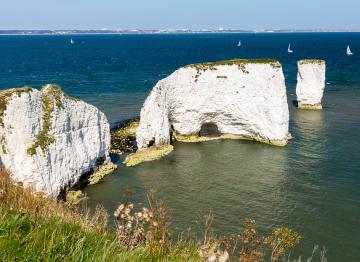
Everyone loves a good story. And everyone loves a good picture. From the hand print of baby Johnny stuck to the fridge to the framed ‘painting’ hanging on top of your settee, every picture tells a story. Of course, the picture with Johnny’s handprint does not need any artistic merit. What matters in that particular case is the pride Johnny's mummy and daddy feel when someone comes to visit and notices the ‘painting’. And with good reason too. After all you never know what that painting could be the start of, do you? But what about the picture decorating your living room wall? The one that’s there covering that important space behind your sofa? Is it just hanging there because that’s what everyone does with that particular space in their house? Of course there's nothing wrong with that, if all you want is to fill a space on your wall that is. These days you can go to a lot of shops and for two Euros you can have a 'print' hanging in any wall of any room in your house. What puzzles me is this. Most people will pay a fortune for the precise piece of furniture they always wanted. They will even fork out a decent sum of money for the 'right' vase or ornament to sit on or with that furniture. But when it comes to a painting, many times it becomes a different issue and all that seems to matter is 'Does the frame fit in with the decor'! Now I am a professional artist, and as such I do believe that it's a matter of attitude. The issue is that a lot of people still think of paintings, prints and anything hanging on the wall as just that; something in a frame to cover a space on the wall. So even if you have an original Van Gogh, it will only get hung if it’s in the right frame, that is the one that matches the wardrobe. But let us consider a few things to, hopefully, change a few people’s perception towards this general viewpoint. You spent months, even years, making sure you live in the the right environment, that is making your house a home. You choose your neighbourhood carefully. You go to a hundred different shops to select your furniture. Room by room, the style, colour and shape of everything you posess has to be perfect. You purchase all the relevant magazines to see what is beautiful, trendy and really ‘you’ and then try your utmost to have everything in your home just so. So why stop doing that when it comes to what you will hang on your walls? Why not buy a painting with the same attitude as when you bought the rest of your belongings? After all, what becomes more precious with the passing of time than a painting? Most things you now have in your home will devalue in no time, but a good painting will always go up in value.That’s why, when you go to a relaible Art Gallery, one of the things you expect them to say to you is the word ‘Investment’. Because when you purchase a good painting from a decent well known artist the value of that painting will most likely go up in time. So buying a painting as an investment is an incentive in itself. But more than that, as with Johnny’s painting, although for a different reason, it is also something to show off with pride. It will make your home feel special. It will tell everyone something about yourself! And you don’t have to spend a small fortune to possess a good work of art. And you will find that once you have an ‘original’ hanging on your wall, it won’t be just a one off, but the start of a ‘collection’. For me, and I’m not only talking as a professional artist here, it is better to have one good piece of art, than lots of ‘wall-space coverings’ with no meaning at all. Let that ‘picture’ tell the story that you are a person with exquisite taste and a good sense of what is truly valuable and aesthetically pleasing, making your home that little bit more special than it already was. Remember if that picture says a thousand words, they are mostly about you. When I first came to live in the UK, I knew I was going to settle in Dorset and slowly I began to explore the county. Coming from a place like Malta, a little island in the middle of the Mediterranean, I was in awe of the hills, the forest, and the beautiful change of the seasons throughout the year. But most of all my artistic mind and heart fell in love with the Purbecks. Now part of the World Heritage Jurassic coast, it has been and probably continue to be so very special to me. I can say it has served me well too. I have painted and sold more paintings of Old Harry Rocks than anything else since I’ve been here. Every time I visit that place I find myself looking, not just at some rock formation, but a stunning natural monument coming out of the azure Dorset Sea which makes me want to discover it a bit more. There are various stories about the naming of the rocks. One legend says that the Devil (traditionally known euphemistically as "Old Harry") slept on the rocks. Another local legend says that the rocks were named after Harry Paye the infamous Poole pirate whose ship hid behind the rocks awaiting passing merchantmen. Yet another tale has it that a ninth-century Viking raid was thwarted by a storm and that one of the drowned, Earl Harold, was turned into a pillar of chalk Whatever you believe about Old Harry, (or you can make up your own story of course!) when you are on top of those rocks you can’t help but be inspired by its beauty. I know that whenever Ruth and I go there we both want to sketch, paint, and take even more photos than we already have and get back home to paint yet another interpretation of Old Harry Rocks. To me Old Harry Rocks are what the Water Lilies were to Monet, and Mont Sainte Victoire was to Cezanne. They never tired of painting the same subject, always trying to find something new and exciting in them. Yes, they found other themes to put on canvas, but those became a part of who they were, what they are remembered and revered for, what made them stand out as artists. I am now painting Abstracts, in all shapes and form and colour, but Old Harry Rocks will be a part of my repertoire for the rest of my artistic life. Sunday.... rest day... yeah right!!!!
Today started with helping Ruth in the garden. I really wanted to continue working on my paintings (having started several at one time this week!) but really enjoyed the 'end of season' work we did. Taking down the bean stalks and getting covered with black insects! But it was fun!! Now, this afternoon I shall continue, first my huge abstract and then my new 'New Forest' painting. And while I'm doing that I will probably be listening either to music or some artist sharing his or her wisdom on Youtube. I don't know about you other artists out there, but I get really excited squeezing my tubes and seeing the dollops of colours sitting next to each other waiting for my brush to pick them up and putting them on my canvas as if they're all putting their hands up like little kids and saying... "Me next, me next!" Oh well, that's my cup of tea finished. Colours.... here I come! So today, while painting on my own, I thought I would listen to a few artists on Youtube. As an artist I always want to know what's going on out there and try to get in the mind of those who have 'made it' in the art world.
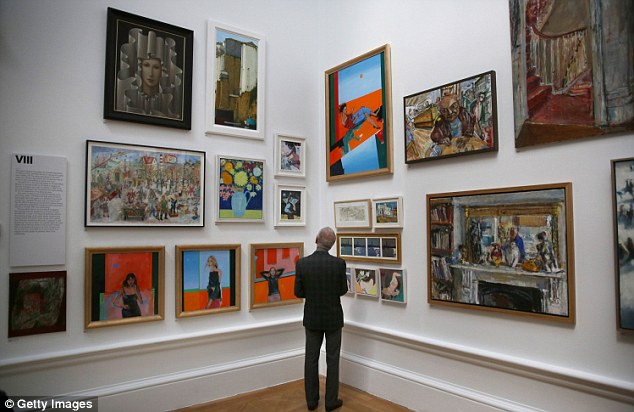
Right now my favorite artist, especially to listen to, is Grayson Perry. Winner of the famous/infamous Turner prize, potter par excellence and many other arty/crafty things. He is the only potter to win the Turner prize, by the way. I went through three videos of him either in his studio, talking at some art college or being interviewed on television. The last one I watched was a part of a series called... In confidence. He was utterly brilliant on all of them and an inspiration. No high brow, bullshitting or 'look at me I'm famous' just an ordinary guy telling it as it is. His pots can be controversial and humorous, but always brilliant. He is now making tapestries relating to today's society. All very intellectually resplendent! Then I spotted the same program (In confidence) featuring Tracy Emin. Now those who know me well know what I think about her and her art.... but I thought 'let me give her a chance and see what comes out of her this time! I really started listening with an open mind and ear... But...... oh dear oh dear... The first fifteen minutes of her interview I did not hear a word about art...instead the usual drivel of how many abortions she had. It went on (cause I was determined not to let prejudice overcome me) about how she got raped, how all the critics hate her, how she was abused... oh, and how she is more intelligent than many of us!!! By the way, can please someone tell me how she was made 'professor of drawing' at the RA? Waiting to hear from you all !!!! So at last Ruth and I managed to go and visit the Royal academy summer exhibition in London. One thing you get to know about the exhibition... the biggest of the year... is that you never know what to expect!
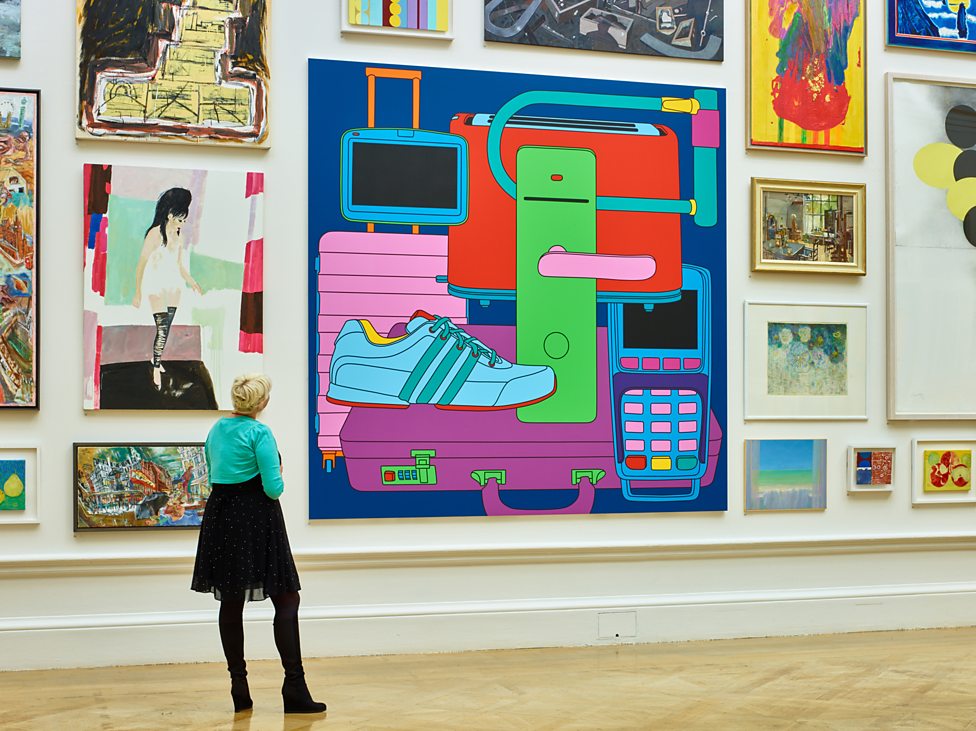
We have been going to see it for quite a few years now... and it is never the same in that some times it has been quite disappointing and other times very inspirational. This year I thoroughly enjoys it while Ruth ...well not as much as me. The main reason for this , I think is that Ruth loves to see the more traditional work, whereas I nowadays prefer the more modern look. Nothing with with any of that! What we both loved though, is that there were a lot of 'good art' mainly coming from unknown artists, who, every year inspire to have a their picture hung next to the 'established' and even 'famous' artists. (or in the case of Tracy Emin... infamous!) And there was also a lot of this 'unknown' art that was sold. Every year the members of the RA are given there own spaces to hang amidst all this, and that's maybe one thing I get disappointed with. Because whereas these, unknown artists are making every effort to produce and exhibit there best creations, it seems that these 'established and honorable' members don't put the same effort in it and just seem to hand over one or two of the work from their studios knowing it will get hung whatever! But all in all one thing we came out with was our determination that we will be trying our 'luck' next year and put in a couple of pieces of our work for 2017. So watch this space! Doesn't time fly when you're having fun!! It also flies when you get busy.
So what have we achieved during this first year back home? Well for a start we have established that what worked in Malta regarding our prints... is working here too, starting with the beautiful Dorset. We already have twenty prints which are selling from quite a few outlets in the south, including some big establishments, like Haskins garden centers and the National Trust in Corfe Castle, to name a couple. Ruth is working very hard on our new pieces of Equipment. The Mac and the digital printer are being tested as I write! Although it is just my paintings we are selling (for now) Ruth does all the technical work. In other words I couldn't do it without her! We have a lot more to accomplish and it will be all shown here on the website in due time. (I promise) One thing I really want to do, and which Ruth has been; I was going to say nagging me about (though encouraging is a more appropriate word) is to become more active on my blog and keep up to date with what we're doing and achieving week in week out. It has been hard work, but exciting so far and we're determined to make it even more so. And hopefully later this week we will be visiting the RA for the summer exhibition and the Georgia O'Keeffe exhibition at the Tate. I shall let you know our thoughts and judgement on those on a later post. Till then... fill your lives with colour! |
|